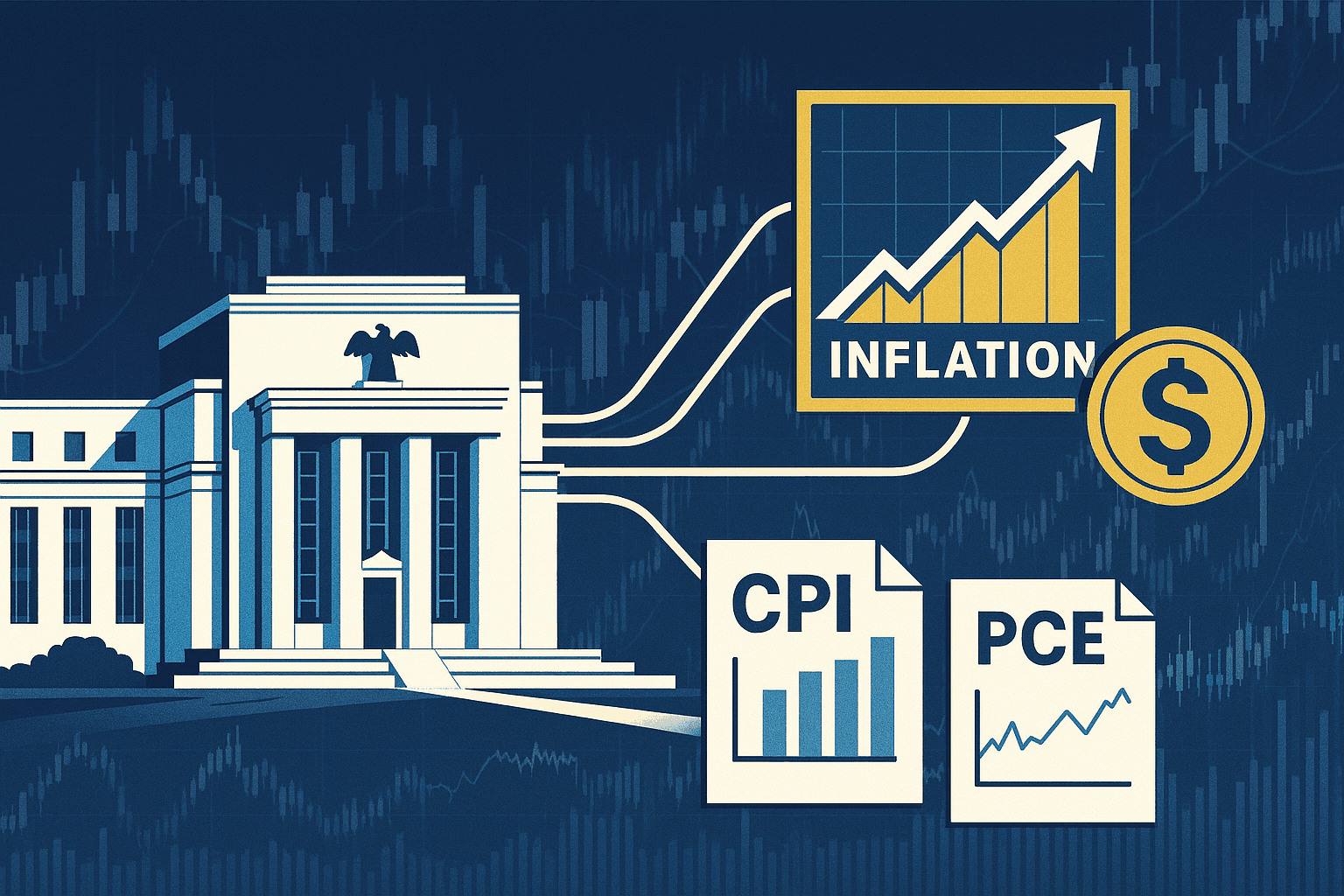
Inflation data and Fed policy are among the most powerful forces shaping monetary policy worldwide. In the United States, inflation plays a central role in determining the Federal Reserve’s actions. For forex traders, understanding how inflation data influences the Fed’s stance is critical, as it directly affects the U.S. dollar and global currency markets. In 2025, where markets remain hyper-sensitive to economic data releases, inflation continues to be a dominant factor in shaping the Federal Reserve’s decisions on interest rates, liquidity measures, and forward guidance.
Why Inflation Matters to the Fed
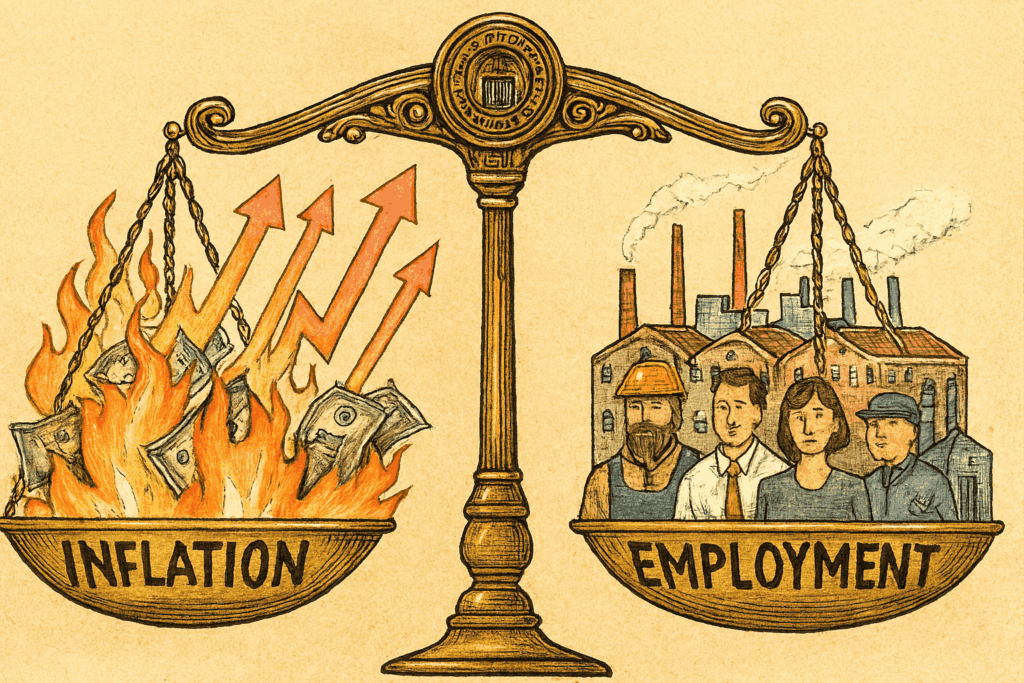
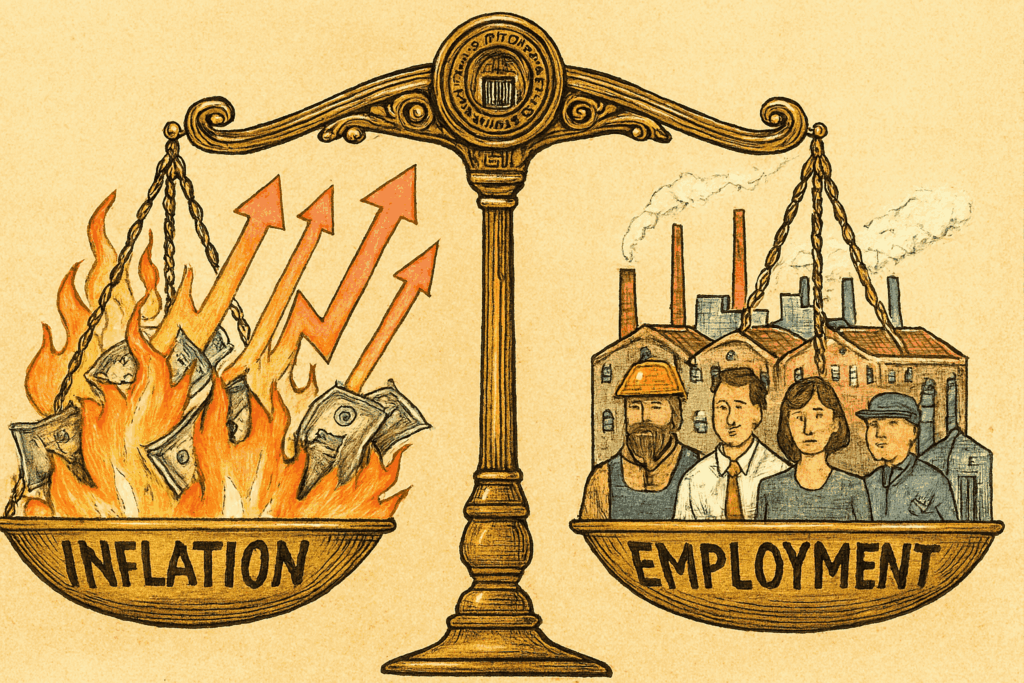
The Federal Reserve has a dual mandate: promoting maximum employment and ensuring price stability. Price stability, often defined as maintaining inflation around 2%, is particularly important for long-term economic health. When inflation rises above this target, consumer purchasing power erodes, and the Fed typically responds by raising interest rates to cool demand. Conversely, when inflation falls too low, it signals weak demand, prompting the Fed to lower rates to stimulate economic activity.
This balancing act means that inflation data is not just an economic indicator it’s a roadmap that dictates how aggressive or accommodative monetary policy will be.
Key Inflation Metrics the Fed Watches
The Fed tracks several inflation indicators, but two stand out as the most important for policy decisions:
- Consumer Price Index (CPI): Released monthly, CPI measures the average change in prices paid by consumers for goods and services. A hot CPI print often sparks immediate forex volatility as traders price in the likelihood of rate hikes.
- Personal Consumption Expenditures (PCE) Index: Considered the Fed’s preferred inflation gauge, PCE provides a broader view of consumer spending patterns. Core PCE, which excludes volatile food and energy prices, is seen as a more stable guide for policy direction.
Both indicators provide different but complementary insights into inflationary pressures. For traders, sharp deviations from forecasts can lead to significant movements in USD pairs.
The Inflation-Fed Policy Connection
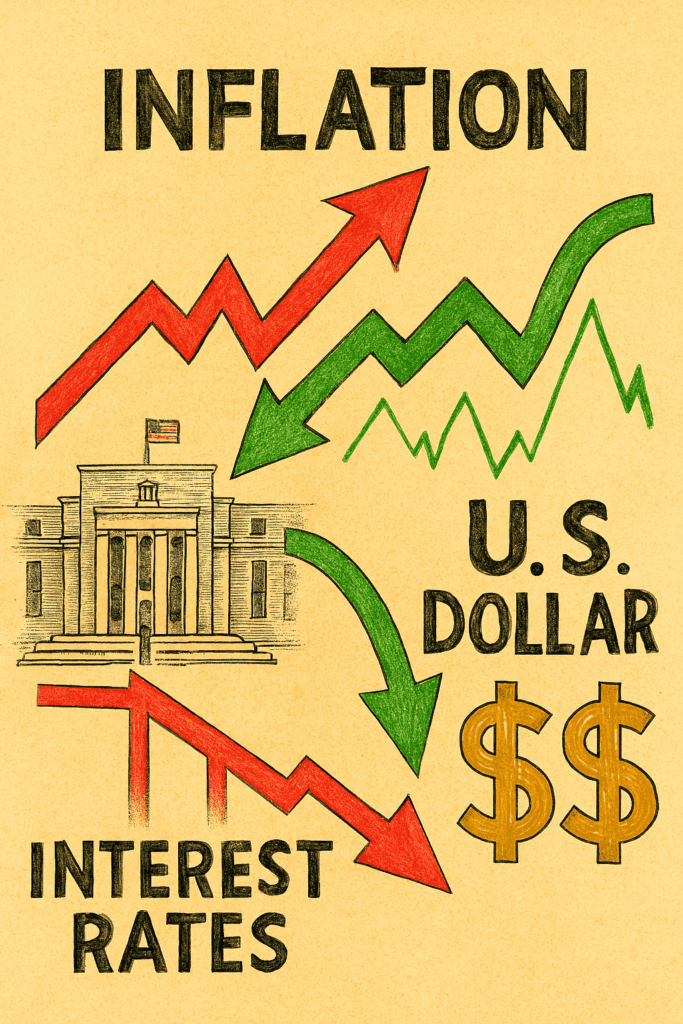
When inflation trends higher, the Fed generally tightens policy by increasing interest rates or reducing bond purchases (quantitative tightening). These moves strengthen the U.S. dollar because higher yields attract foreign capital. On the other hand, when inflation weakens, the Fed often pivots toward easing cutting rates or expanding asset purchases. This typically weakens the dollar, as lower yields reduce its appeal.
For forex traders, the cause-and-effect relationship is straightforward:
- High inflation = Higher rates = Stronger USD
- Low inflation = Lower rates = Weaker USD
However, traders must also factor in the Fed’s communication strategy. Sometimes, the Fed may tolerate temporary inflation overshoots if employment is lagging, leading to market surprises.
The Role of Expectations and Market Psychology
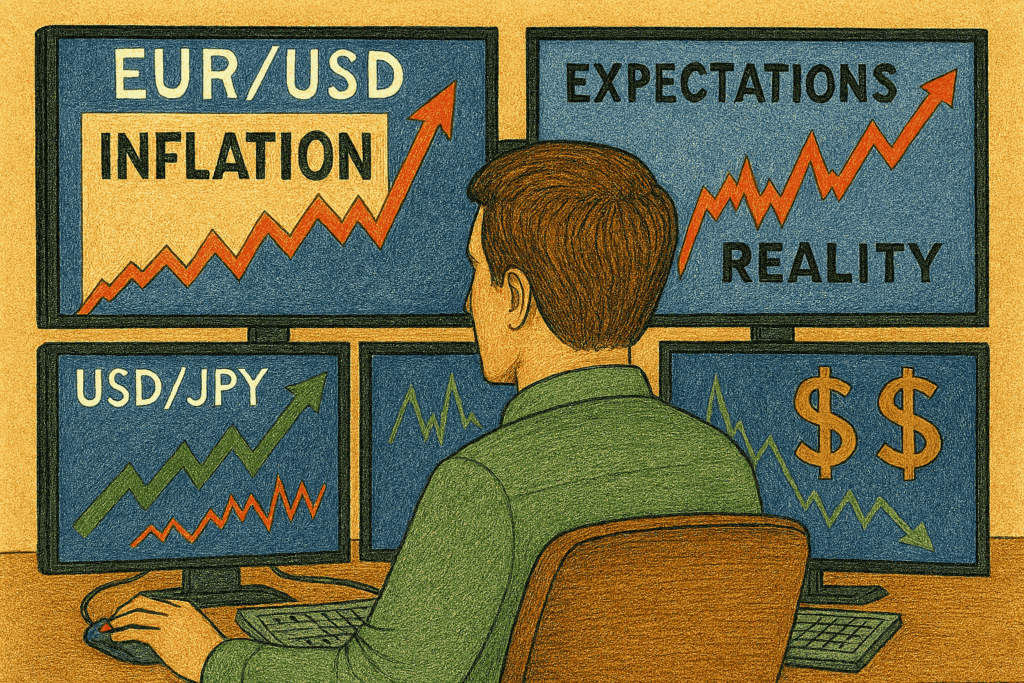
Markets don’t just react to actual inflation numbers they also respond to expectations. If inflation data aligns with forecasts, markets may remain calm. But a surprise reading either higher or lower can trigger sharp moves in currency pairs like EUR/USD, USD/JPY, and GBP/USD.
Additionally, forward-looking indicators such as wage growth, supply chain conditions, and commodity prices feed into inflation expectations, often moving markets before official reports are released.
Implications for Forex Traders in 2025
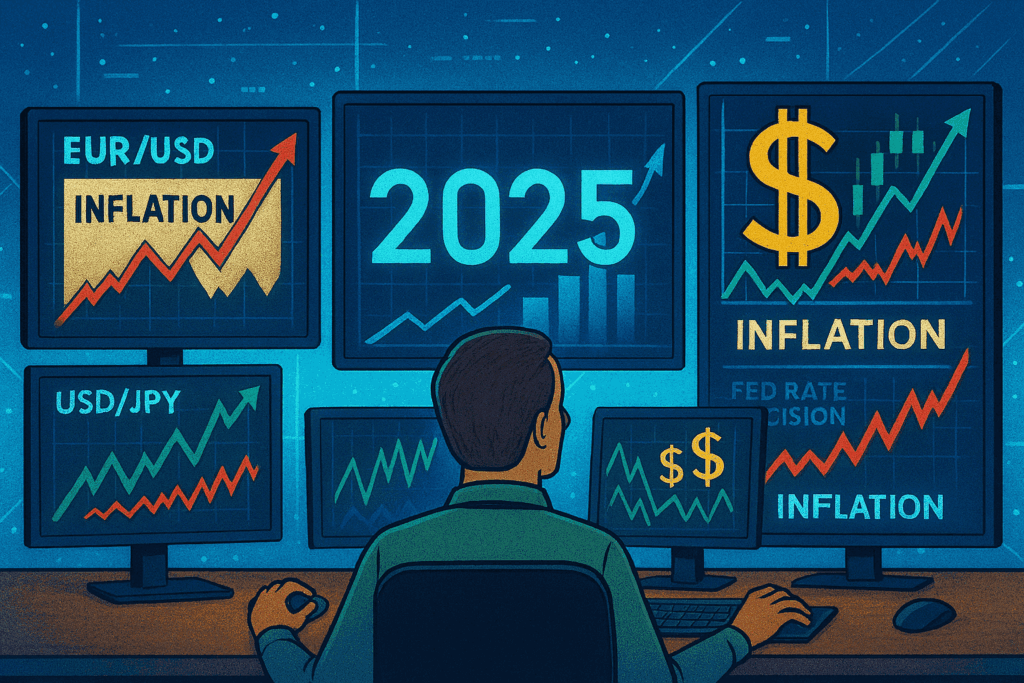
As of 2025, inflation remains a critical driver of volatility across USD pairs. With global supply chains stabilizing but energy markets remaining unpredictable, inflationary shocks are still a risk. For traders, this means closely monitoring not only CPI and PCE but also speeches by Fed officials that hint at how the data influences future decisions.
Successful forex strategies in this environment require a combination of:
- Economic Calendar Tracking: Watching for inflation releases and preparing for volatility.
- Correlation Analysis: Linking inflation trends with Fed rate expectations and USD strength.
- Risk Management: Using stop-loss orders and position sizing to weather sharp market moves.
🎯 Conclusion
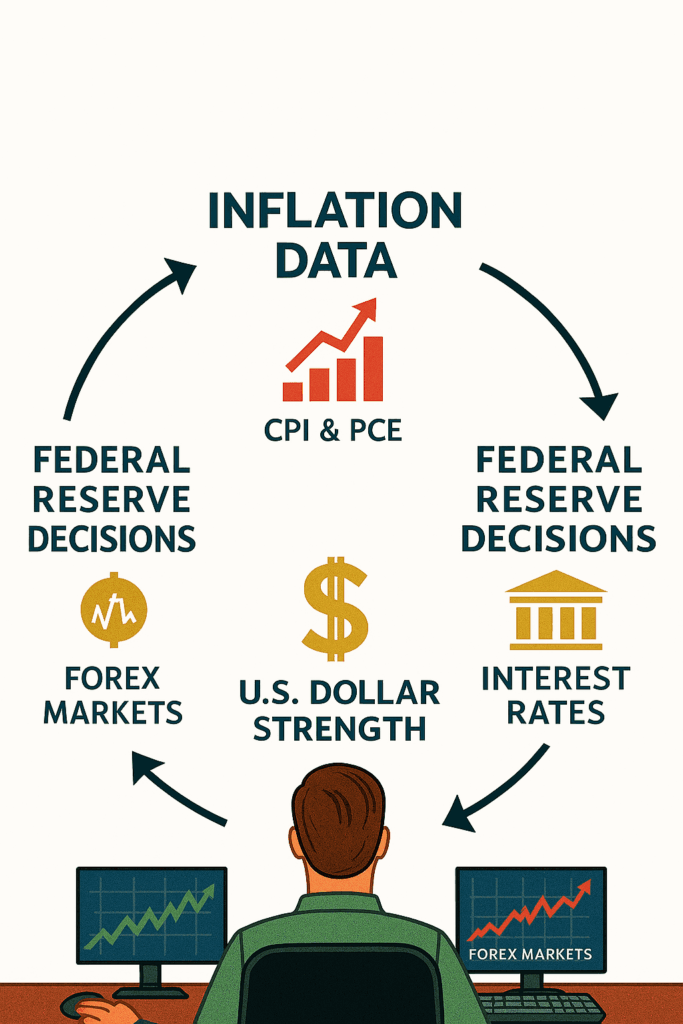
Inflation data and Federal Reserve policy are inseparable forces that shape the global forex landscape. Every CPI or PCE release provides clues about the Fed’s next move, influencing the strength of the U.S. dollar and dictating trading opportunities. In 2025, where markets remain data-driven and fast-moving, traders who master the link between inflation reports and Fed policy will be best positioned to anticipate market swings and make informed trading decisions.