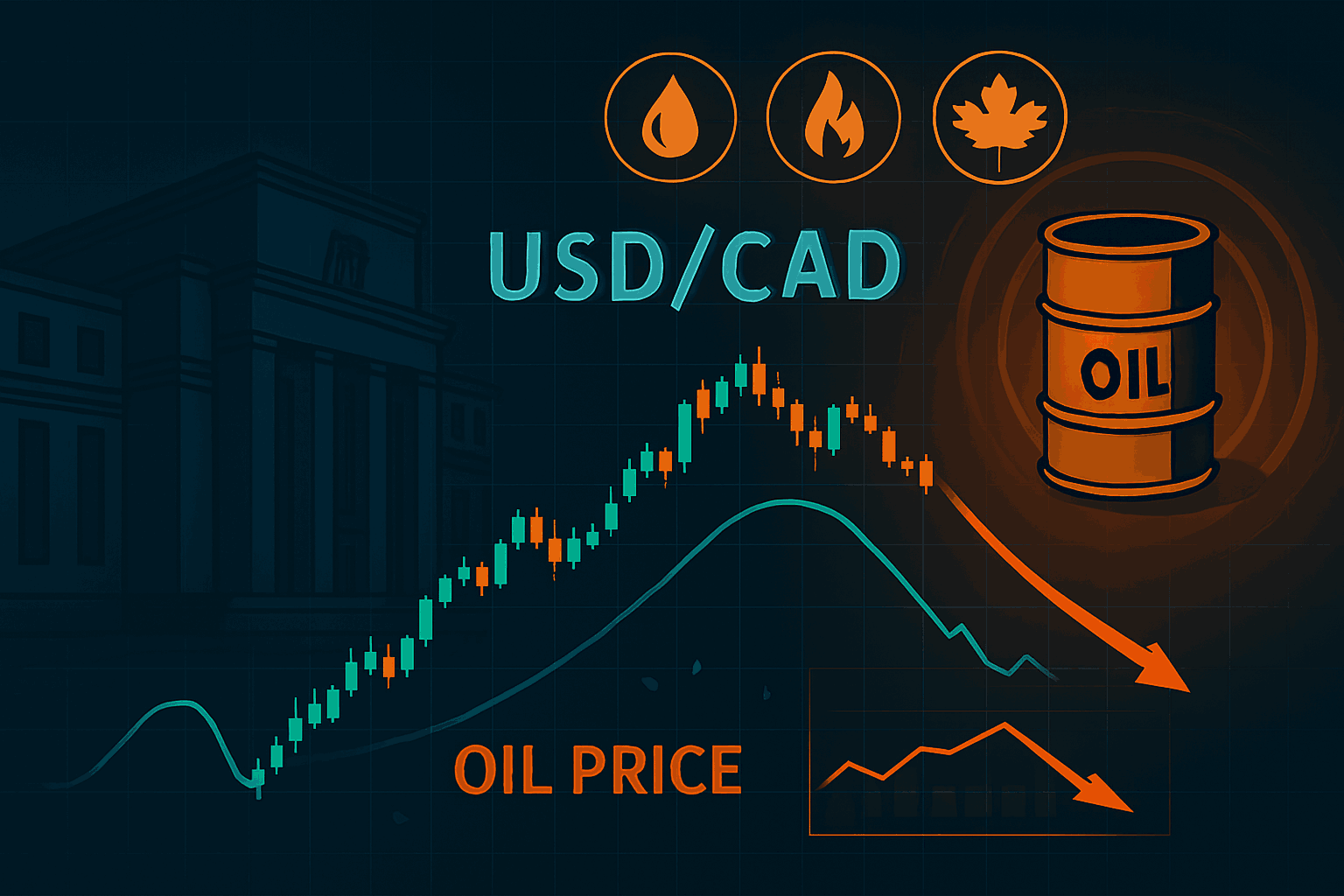
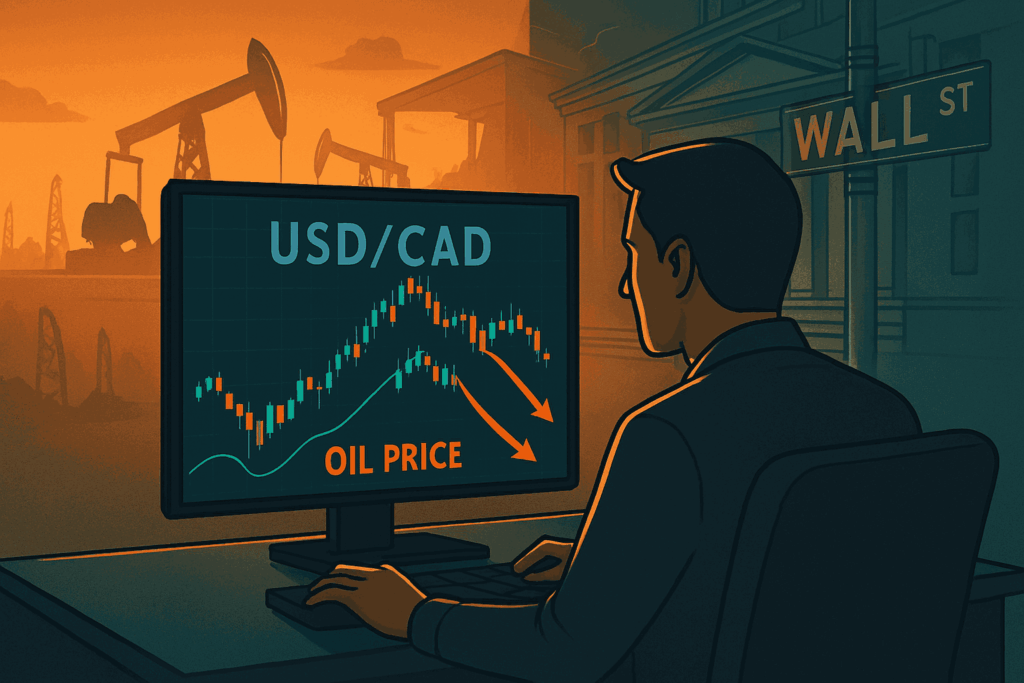
The impact of commodities on USD/CAD movements is a crucial factor every forex trader should understand. The USD/CAD currency pair is one of the most closely watched in the forex market, not only because of the United States’ dominant role in the global economy but also due to Canada’s unique dependence on commodities. Often referred to as the “commodity currency pair,” the Canadian dollar (CAD) tends to move in tandem with the prices of key resources such as oil, natural gas, and metals. For traders, understanding this relationship is critical for making well-informed decisions and predicting shifts in USD/CAD trends.
Canada’s Economy and Commodities
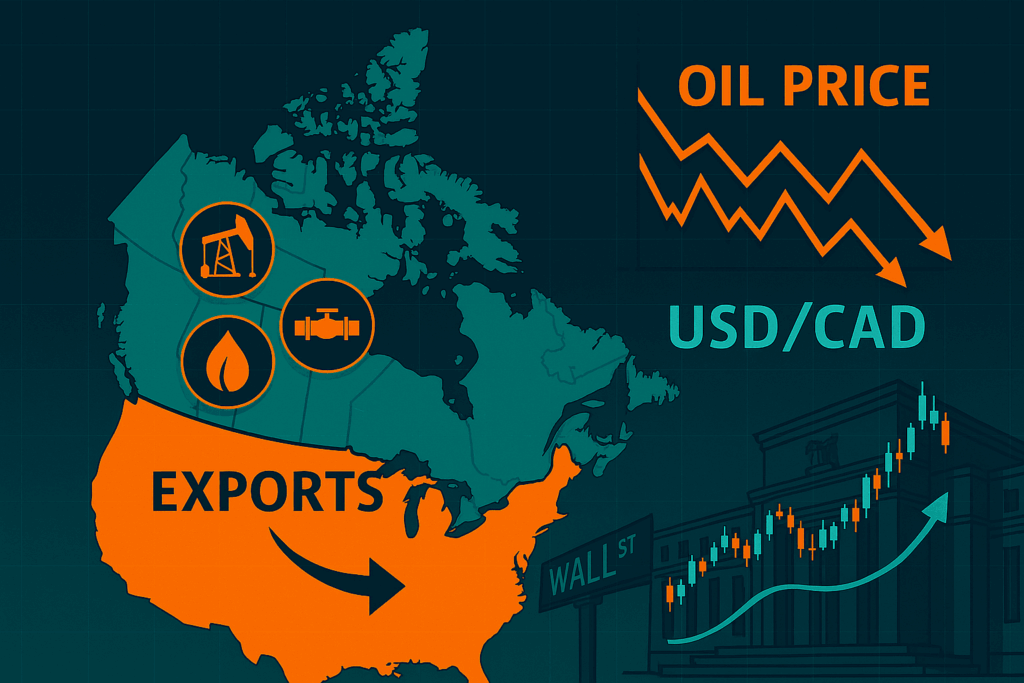
Canada is among the world’s largest exporters of natural resources, with crude oil being the most significant contributor to its economy. The energy sector accounts for a substantial portion of Canadian exports, and oil sales to the United States remain a cornerstone of the trade relationship between the two countries. As a result, fluctuations in crude oil prices often have a direct impact on the strength of the Canadian dollar.
When oil prices rise, Canada’s revenues increase, strengthening its economy and boosting demand for the CAD. Conversely, falling oil prices can reduce export revenues, weakening the CAD. This link explains why the USD/CAD often behaves inversely to global oil trends, earning it the reputation of being a “petro-currency” pair.
The Role of the U.S. Dollar
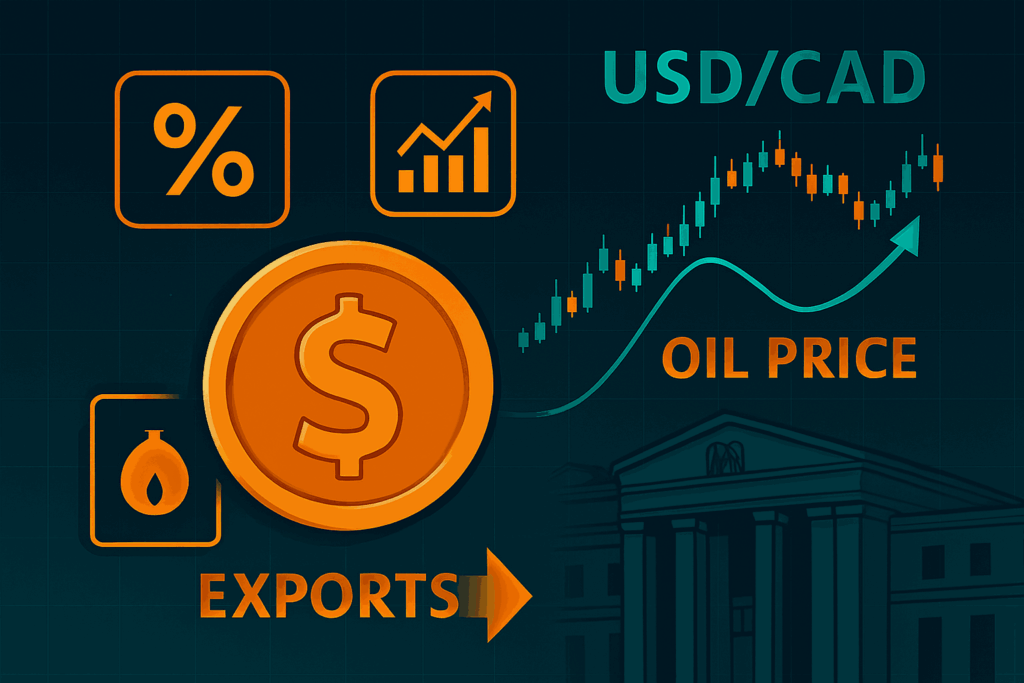
While commodities heavily influence the CAD, the USD’s status as the world’s reserve currency plays an equally important role. The Federal Reserve’s monetary policy decisions, U.S. inflation data, and economic performance all contribute to shifts in USD strength. Since USD/CAD is a major pair, its movements often reflect not just Canadian fundamentals but also U.S. global standing.
For example, if the Federal Reserve signals rate hikes, the USD typically strengthens. If this coincides with a drop in oil prices, traders may see a sharp rise in USD/CAD, as both forces align to weaken the CAD against the dollar.
Key Commodities Affecting USD/CAD
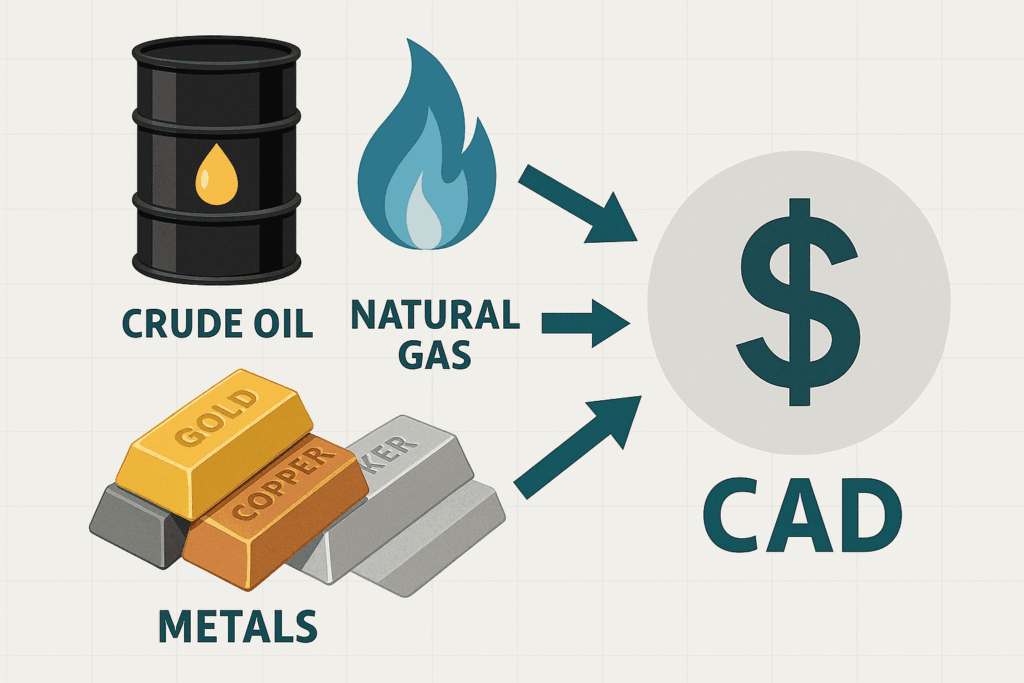
- Crude Oil: The most significant driver, given Canada’s export reliance and the U.S. role as its largest buyer.
- Natural Gas: Seasonal demand fluctuations, especially in North America, also play a role in CAD strength.
- Base Metals: Canada’s mining sector, which produces nickel, copper, and gold, contributes additional correlation between commodity performance and CAD value.
These commodities, while not as influential as oil, can still shape long-term sentiment toward the Canadian dollar.
Global Events and Geopolitical Risks
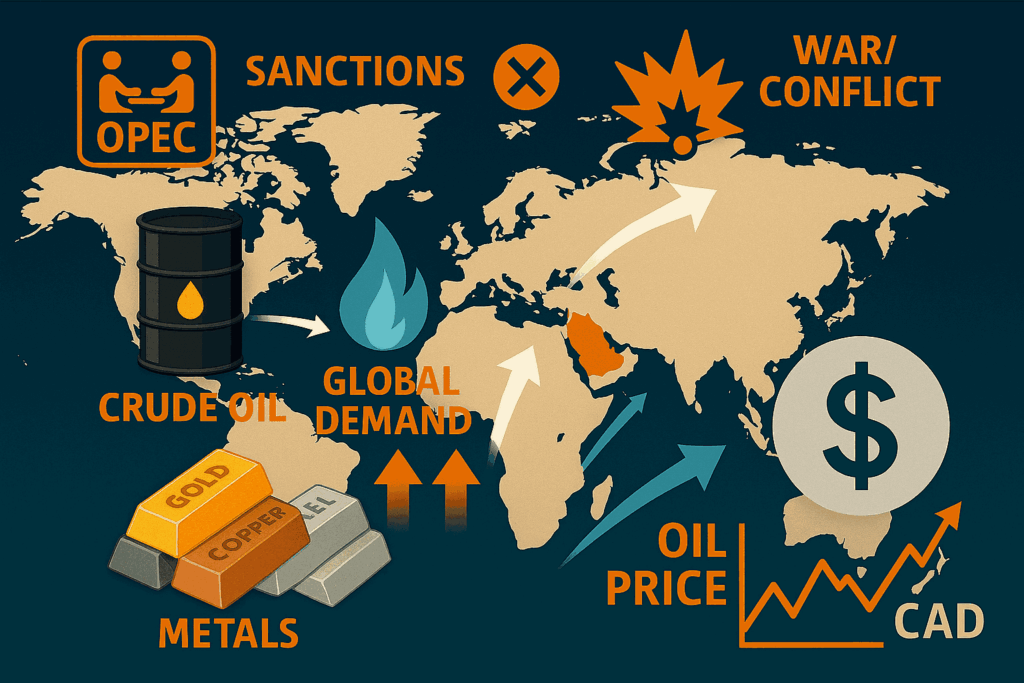
Commodities are also affected by external shocks such as geopolitical tensions, trade disruptions, or OPEC production cuts. Any disruption in oil supply can send prices soaring, strengthening the CAD. On the other hand, global recessions or weak demand can reduce commodity consumption, weighing heavily on Canada’s export-driven economy and dragging down the CAD.
For example, during the 2020 oil price crash, USD/CAD spiked significantly as crude prices plunged into negative territory. Similarly, in 2022, when oil prices surged due to supply disruptions, the Canadian dollar gained strength despite broader market volatility.
How Traders Can Use This Knowledge
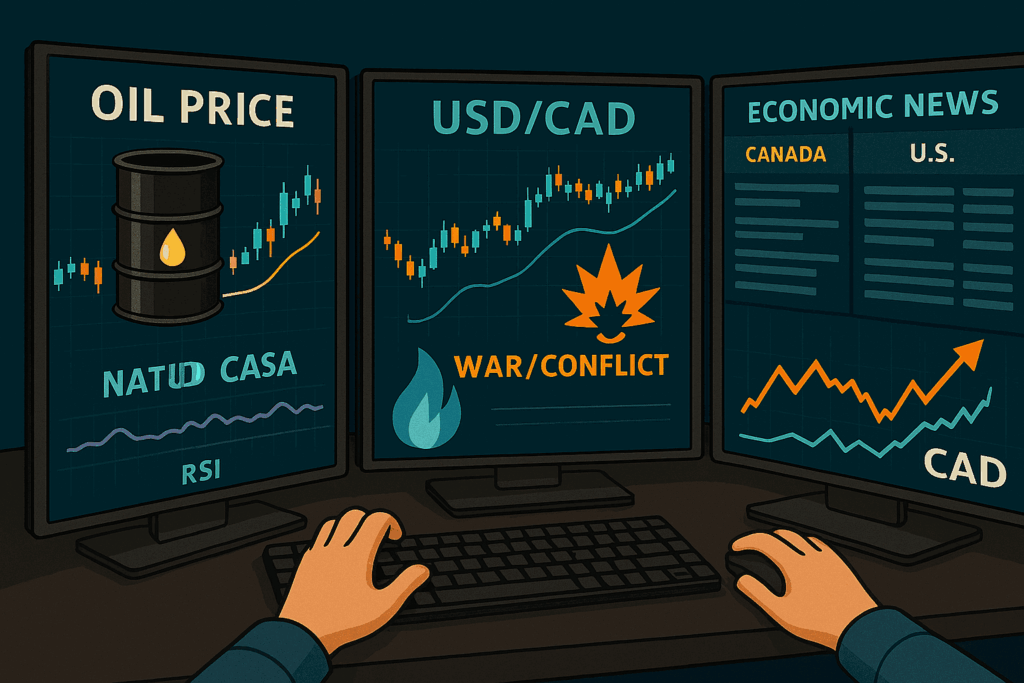
Traders monitoring USD/CAD should closely follow:
- Oil and Energy Market Reports – Weekly U.S. crude oil inventories, OPEC meetings, and global demand forecasts.
- Canadian Economic Indicators – GDP growth, trade balance, and employment data provide context for CAD movements.
- U.S. Monetary Policy – Federal Reserve statements and interest rate changes directly affect USD strength.
- Global Risk Sentiment – Safe-haven demand for the USD during market uncertainty can overpower commodity-driven trends.
By combining commodity analysis with macroeconomic data, traders can gain a clearer picture of where USD/CAD is headed.
Conclusion
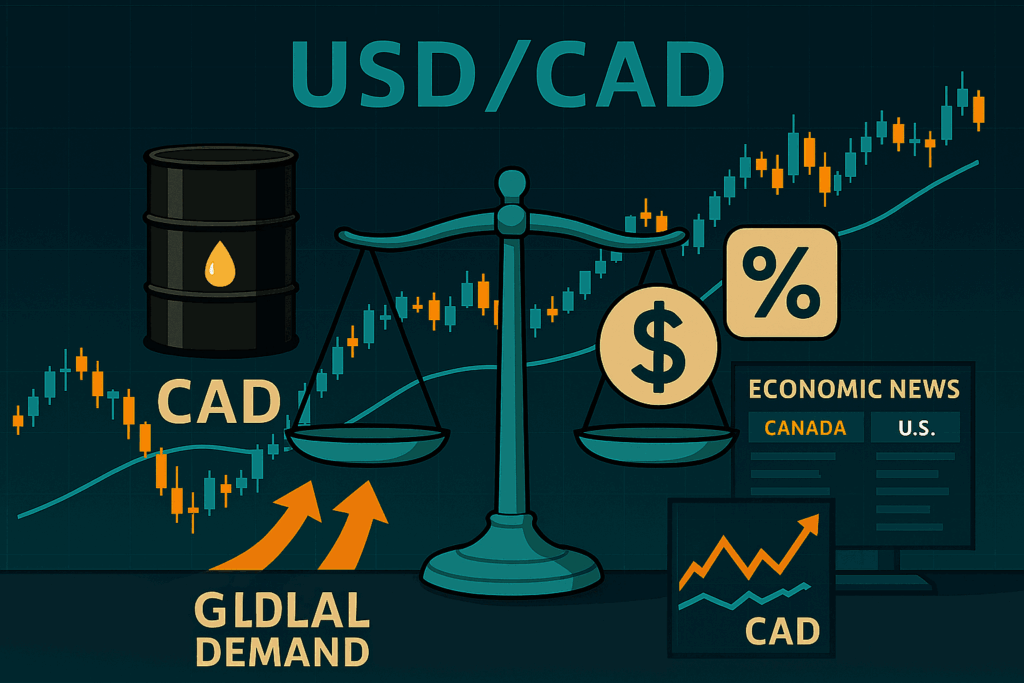
The USD/CAD is far more than just a reflection of U.S. and Canadian economic conditions , it’s a currency pair deeply tied to global commodity markets, particularly oil. Rising oil prices often strengthen the Canadian dollar, while falling prices weaken it. At the same time, U.S. monetary policy and global safe-haven flows ensure that the USD remains a powerful counterbalance.
For traders, understanding the interplay between commodities, U.S. policies, and Canada’s resource-driven economy is essential. In 2025, as the world navigates energy transitions, supply disruptions, and economic uncertainty, the impact of commodities on USD/CAD will remain one of the most important dynamics to watch.